
Introduction
Finding a job has changed dramatically over the years. Earlier, job seekers depended on newspapers, walk-ins, or personal references. Today, most job searches begin online.
Job search platforms have become the primary bridge between employers and job seekers. They list opportunities across industries, locations, and experience levels, making it easier to discover roles that match individual skills and interests.
For students, fresh graduates, experienced professionals, and even career switchers, understanding how job search platforms work and how to use them effectively can make a real difference. This article explains what job search platforms are, how they help job seekers, and how to choose the right platform based on career goals.
What Are Job Search Platforms?
Job search platforms are online websites or applications that connect employers with potential candidates. Employers post job openings, and job seekers search, apply, and track opportunities through these platforms.
These platforms act as digital job marketplaces. Instead of visiting multiple company offices or websites, job seekers can explore thousands of listings in one place.
Most platforms allow users to create profiles, upload resumes, set job alerts, and apply directly to roles.
How Job Search Platforms Work
Although features vary, most job search platforms follow a similar process.
Creating a Profile
Job seekers begin by creating a profile that includes personal details, education, work experience, and skills. Some platforms also allow users to add portfolios or certifications.
A complete and accurate profile improves visibility and increases chances of matching with relevant jobs.
Searching for Jobs
Platforms provide search filters that help job seekers narrow down opportunities. Common filters include:
- Job role or title
- Location
- Industry
- Experience level
- Employment type
These filters save time and make the search process more focused.
Applying for Jobs
Once a suitable job is found, job seekers can apply directly through the platform. Applications usually involve submitting a resume and, in some cases, answering basic screening questions.
Some platforms also allow recruiters to contact candidates directly based on profile relevance.
Tracking Applications
Many job search platforms allow users to track application status. This helps job seekers manage multiple applications and follow up when needed.
Types of Job Search Platforms
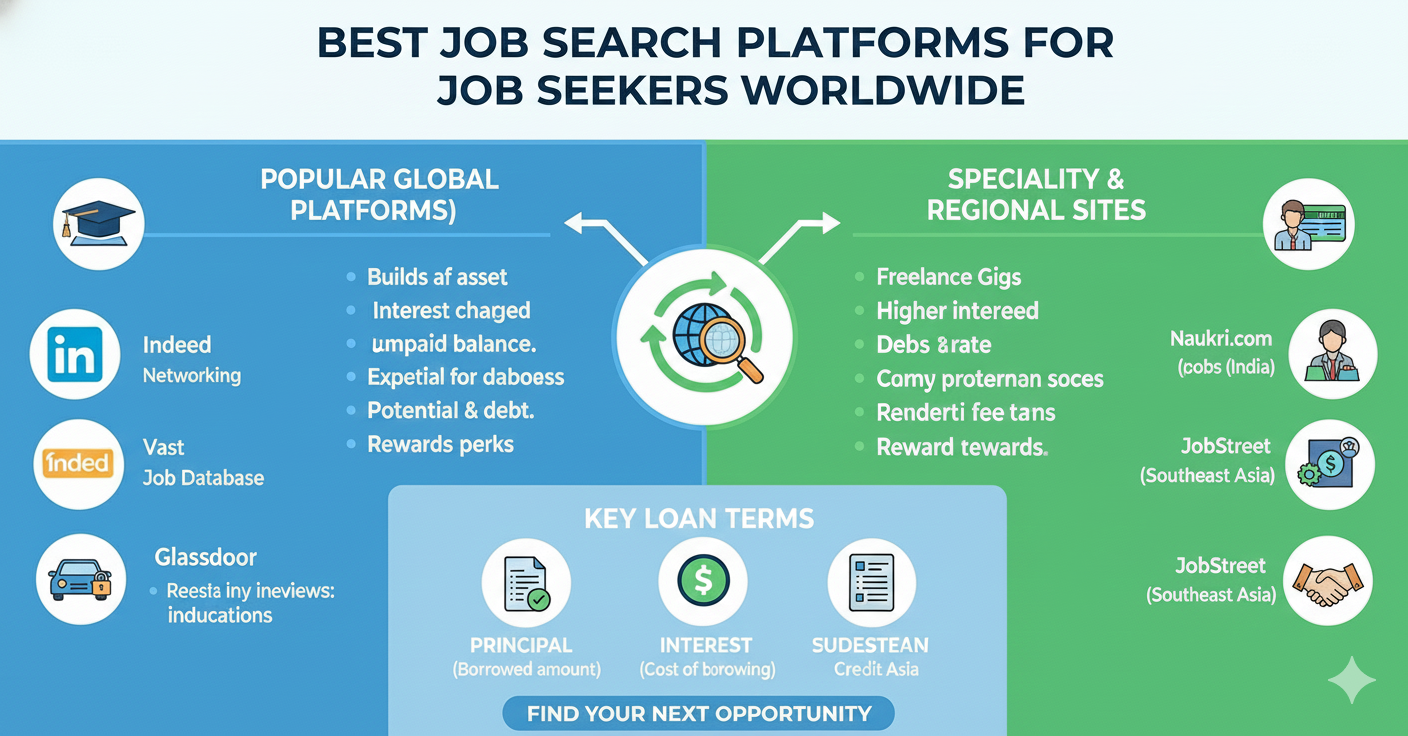
Job search platforms can be grouped based on their focus and purpose.
General Job Portals
These platforms list jobs across various industries and roles. They are suitable for most job seekers and offer a wide range of opportunities.
General portals are useful for:
- Entry-level roles
- Mid-career positions
- Exploring different industries
Professional Networking Platforms
Some platforms combine job listings with professional networking. These platforms allow users to connect with professionals, follow companies, and engage with industry content.
Networking-focused platforms help job seekers:
- Build professional visibility
- Learn about company culture
- Access opportunities through connections
Skill-Based and Freelance Platforms
These platforms focus on project-based or contract work. They are commonly used by freelancers, consultants, and remote workers.
They are useful for:
- Gaining experience
- Building portfolios
- Flexible work arrangements
Company Career Pages
Many companies post jobs on their own websites. While not platforms in the traditional sense, career pages are important sources of verified opportunities.
Job seekers often use job platforms to discover companies and then apply directly through official career pages.
Benefits of Job Search Platforms for Job Seekers
Centralised Access to Opportunities
Job search platforms bring multiple job listings together in one place. This saves time and effort compared to searching across individual company websites.
Wider Reach
Job seekers can explore opportunities beyond their local area, including remote and international roles. This expands career possibilities significantly.
Improved Matching
Many platforms use algorithms to match candidates with relevant roles based on skills and experience. This helps job seekers find better-fitting opportunities.
Career Insights
Some platforms provide additional resources such as salary insights, company reviews, and interview experiences. These insights help job seekers make informed decisions.
Choosing the Right Job Search Platform
Not every platform suits every job seeker. Choosing the right one depends on individual goals.
Job seekers should consider:
- Industry focus
- Experience level
- Preferred job type (full-time, part-time, remote)
- Geographic preference
Using multiple platforms strategically often yields better results than relying on a single one.
Tips for Using Job Search Platforms Effectively
Keep Profiles Updated
Regularly updating profiles with new skills, experiences, and certifications improves visibility and relevance.
Use Relevant Keywords
Job search platforms rely on keywords. Using role-specific terms increases chances of appearing in recruiter searches.
Set Job Alerts
Job alerts notify users when new roles matching preferences are posted. This allows quick applications, which can be an advantage.
Apply Selectively
Quality matters more than quantity. Applying for roles that genuinely match skills and interests leads to better outcomes.
Follow Up Professionally
When possible, following up on applications through appropriate channels shows interest and professionalism.
Role of Skills in Job Platform Success
Job search platforms highlight the importance of skills. Profiles with clear, relevant skills tend to perform better.
This is where learning platforms complement job platforms. By upgrading skills, job seekers improve profile strength and application success.
Continuous learning and job searching often go hand in hand.
Challenges Job Seekers May Face
While job platforms offer many benefits, challenges still exist.
Common issues include:
- High competition
- Automated screening systems
- Incomplete or unclear job descriptions
Awareness of these challenges helps job seekers stay realistic and persistent.
Job Search Platforms and Career Growth
Job search platforms are not just for finding the next job. They also help job seekers:
- Understand market demand
- Identify skill gaps
- Track career progression
Used wisely, they become long-term career tools rather than one-time solutions.
Global Job Market and Online Platforms
The global job market has become more interconnected. Remote work and international hiring are now common in many industries.
Job search platforms support this shift by enabling cross-border job searches and remote opportunities. This global access benefits both job seekers and employers.
Balancing Job Search and Wellbeing
Job searching can be stressful. Platforms provide tools, but mental balance remains important.
Setting realistic goals, taking breaks, and focusing on skill improvement alongside job applications help maintain motivation and confidence.
Conclusion
Job search platforms have transformed how people find work. They offer access, convenience, and tools that support modern job seeking.
While no platform guarantees success, understanding how they work and using them strategically improves outcomes. Combined with continuous learning and skill development, job search platforms empower job seekers to navigate careers with clarity and confidence.